
Landing your first retail job feels less scary when you know exactly what the hiring process looks like before you walk in. 7-Eleven is one of those names that shows up everywhere, and that visibility works in your favor as a job seeker.
If you're a student, a recent graduate, or someone switching careers without a long resume behind you, this is a realistic look at what actually happens between "I want to apply" and "you're hired."



The requirements are genuinely low for entry-level positions. That's not a marketing line. Age eligibility, basic communication skills, and the ability to show up reliably are what matter most at the start.
One thing worth knowing upfront: franchise-owned locations set some of their own rules. What's standard at a corporate store in one city may differ from a franchise location two blocks away.
Why People Keep Applying to 7-Eleven
The 24/7 operating model is the clearest practical draw. Stores need coverage across morning, afternoon, and overnight shifts, which means scheduling is flexible enough to work around school, family, or a second job.
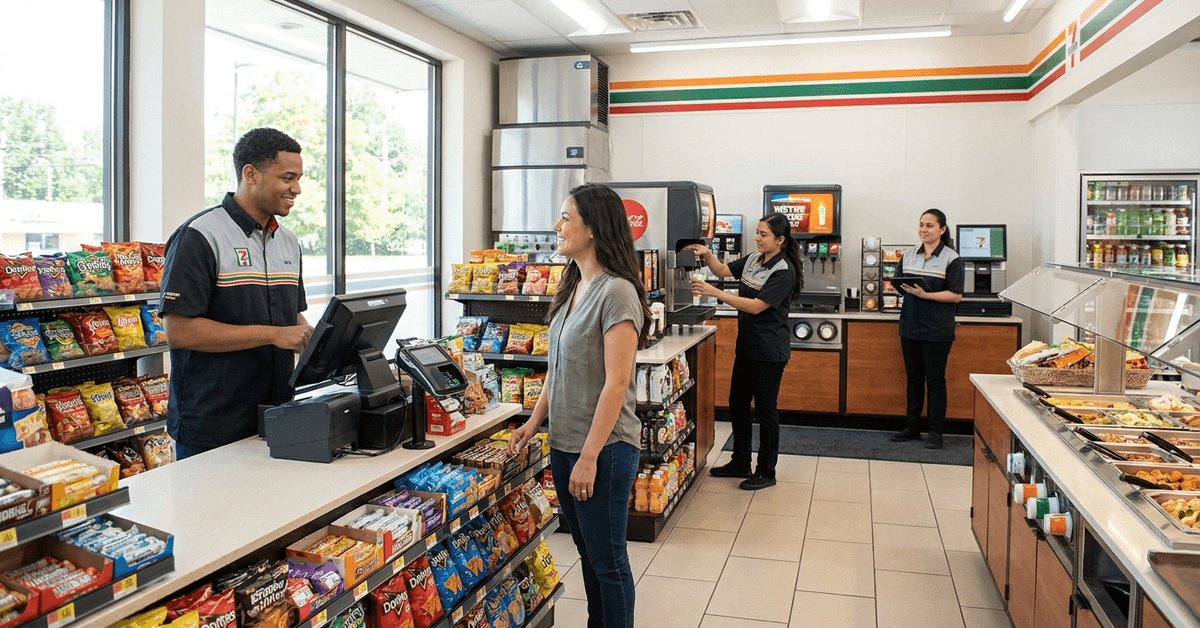
There's also a lower barrier to entry compared to a lot of other retail chains. No college degree, no minimum GPA, no years of experience required to get a cashier role. That opens the door for a wide range of applicants.
Promoting from Within Is Standard, Not a Slogan
I think the internal promotion culture at 7-Eleven is more real than the average job listing implies. Shift supervisors at many locations started as sales associates. Store managers often came up through the same path.
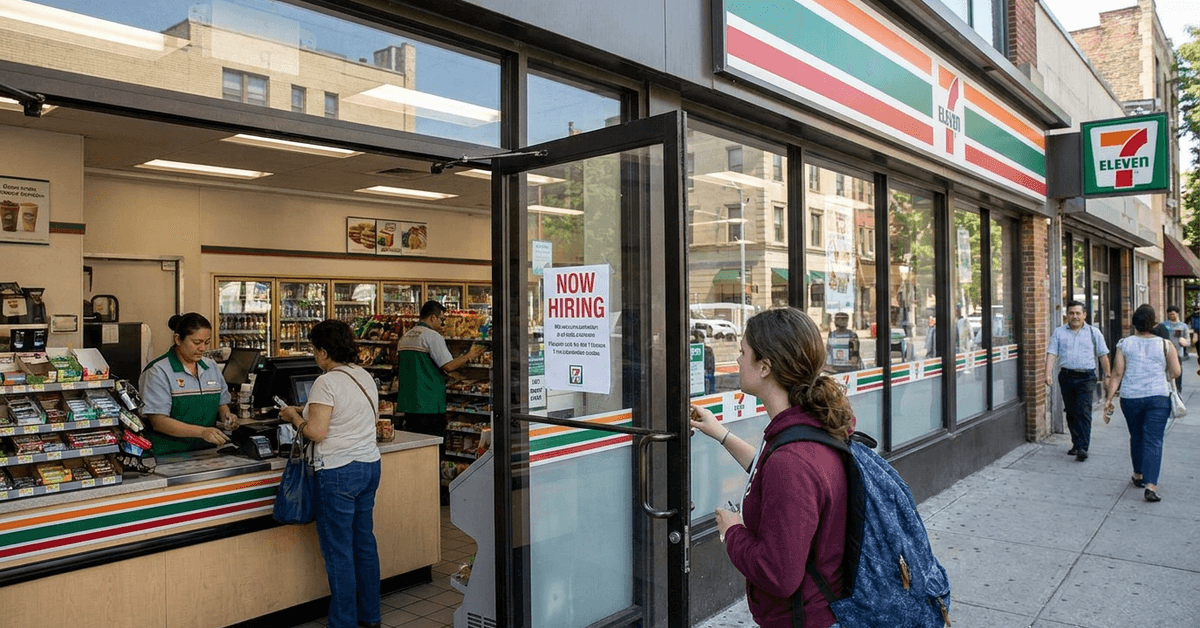
That matters if you're looking at this job as a stepping stone and not just a temporary paycheck. A cashier role today can be a supervisor role in six to twelve months if you're consistent.
The Overnight Shift Nobody Mentions
Overnight shifts are available at 24-hour locations and they come with a specific advantage most applicants overlook: less competition for hours.
Fewer people want to work at 2 a.m., which means overnight workers often get more consistent scheduling and, in some stores, a higher hourly rate.
If you're a night owl or need daytime hours free for school, this is worth asking about during your interview.
What Jobs Are Actually Available
The cashier image is accurate, but it's not the whole picture. 7-Eleven stores carry a mix of roles depending on the store's size and volume.
Sales Associate and Store Clerk
This is the entry-level starting point for most new hires. Daily tasks include running the register, restocking shelves, keeping the store clean, and handling customer questions. The learning curve is short. Most new clerks are functional within a week of training.
Shift Supervisor
A promotion from the sales associate level, this role involves leading the store's operations for a set number of hours per shift.
Strong communication helps. So does the ability to stay calm when something goes wrong, like a register glitch or a short-staffed evening.
Store Manager
Managing a 7-Eleven location means handling hiring decisions, scheduling, inventory, and customer escalations. This role typically requires prior retail experience or internal advancement through lower-level positions.
Stock Associate and Delivery Receiver
Not every role is customer-facing. Stock positions focus on receiving deliveries, organizing the stockroom, and supporting inventory counts. If customer interaction isn't your preference, this is a realistic alternative within the same store.
| Role | Customer Interaction | Experience Required | Typical Path |
|---|---|---|---|
| Sales Associate | High | None | Direct hire |
| Shift Supervisor | Moderate | Some retail preferred | Promoted from associate |
| Store Manager | High | Required | Promoted internally |
| Stock Associate | Low | None | Direct hire |
Most entry-level hires come in as sales associates or stock associates. The table above is a general pattern, not a guarantee for every location.
What You Actually Need to Qualify
Requirements are minimal at the entry level, and that's one of the chain's clearest hiring advantages.
- Age: Most locations require applicants to be at least 18 years old. Some franchise locations may set a different minimum, so confirm with the specific store.
- Work authorization: Legal eligibility to work in the country is required. Applicants typically show government-issued ID or work permits during onboarding.
- Education: No diploma is required for cashier or stock roles. Basic reading, writing, and math are used daily, but no formal credentials are asked for.
- Physical demands: Standing for extended periods is part of the job. Some roles involve lifting moderately heavy boxes during restocking or delivery receiving.
The soft skills that actually matter are reliability and the ability to stay calm with customers. I'd argue those are harder to teach than any technical task in the store.
How the Application Process Works in 2026
Two main paths exist: online and in-person. Both work. The right choice depends on the specific store and how fast you want to move.
Applying Online
The 7-Eleven careers page lists open positions by location. Applicants choose a store, review the available role, and complete a digital form covering basic personal information and prior work history, if any.
Job boards like Indeed also aggregate 7-Eleven listings regularly. Applying through the brand's own career portal is generally faster for follow-up.
Walking In
Some stores, particularly in areas with lower digital access or franchise-managed locations, still accept paper applications at the counter.
Going in person also gives you a chance to ask the store manager directly about current openings. That conversation is often more informative than any job listing.
The Interview and Onboarding
Interviews at 7-Eleven are typically brief and held on-site by the store manager. Common questions are situational: how would you handle a rude customer, what would you do if the register came up short. No trick questions.
Successful applicants are usually contacted within one to two weeks. After an offer, new hires go through a short orientation covering company policies, register operation, and basic safety protocols.
Following Up After Applying
One week with no response is a fair window before following up. A short, polite call or an in-person visit works. Asking about the status of your application signals initiative, and store managers notice that.
My Contrarian Take on Resume Advice for This Job
I genuinely disagree with the common advice to "keep your resume short and simple" for entry-level retail.
At a 7-Eleven interview, a completely bare resume can actually work against you more than a slightly longer one that lists relevant soft skills, side projects, or volunteer experience.
The reason: managers are reading for personality and reliability, not credentials. A resume that shows you've done something, anything consistent and community-facing, gives them a concrete reason to trust you.
Three sentences describing your availability, your reliability record, and one relevant skill will outperform a blank page labeled "no experience."
What the First Few Months Look Like
New hires start with structured training. That includes register operation, product placement, emergency protocols, and customer service basics.
The training period is shorter than at most retail chains. Stores run on consistent systems, which makes the learning process faster. Shifts rotate at 24-hour locations. Early mornings, evenings, and weekends are standard.
For people who want a predictable routine from day one, retail at this scale takes some adjustment. But the rotating schedule also means you can request specific windows over time.
Benefits vary by location and tenure. Some employees receive health coverage, paid leave, or store discounts after a qualifying period.
Long-term employees interested in management may get access to leadership development programs through the company's internal track.
Questions People Ask About 7-Eleven Jobs
Q: Can I apply to multiple 7-Eleven locations at the same time? Applying to several locations simultaneously is a reasonable approach, especially if you're flexible about which store you work at. Each location manages its own hiring, so you may hear back from one before the others.
Q: Do franchise-owned 7-Eleven stores hire differently than corporate locations? Franchise locations set some of their own standards around pay, scheduling, and minimum age requirements. Always confirm details directly with the store rather than assuming the corporate standard applies everywhere.
Q: What happens if I'm hired for overnight shifts? Is the pay different? Pay for overnight shifts depends on the specific location and local labor laws. Some stores offer a differential rate for overnight hours, but this is not universal. Ask the hiring manager during your interview.
Q: Is there a drug test required before starting? Drug testing policies vary by location and region. Some corporate-managed stores require pre-employment screening; many franchise locations do not. The store manager or HR contact can confirm what applies to that specific location.
Q: How long does the whole process take from application to first shift? A typical timeline runs one to three weeks from application submission to starting work, depending on how quickly the store is hiring. High-turnover periods, like summer, may move faster.
Conclusion
Landing a 7-Eleven job takes less than two weeks when you apply directly and follow up politely after one week of silence. The entry requirements are low enough that reliability and availability matter more than anything on your resume.
Franchise and corporate stores run differently, so confirming details with the specific location saves confusion later.
A cashier role today can realistically become a shift supervisor role within six to twelve months, making this a better starting point than it gets credit for.