
A 6% origination fee on a $10,000 personal loan means $600 gets pulled out before you see a dime. The lender deposits $9,400 into your checking account, but you owe $10,000 plus interest.
Most guides about fast personal loans in the USA sort options by the lowest advertised APR. The floor of that range, often around 5.96%, applies almost exclusively to borrowers with 720+ credit scores and spotless income verification.
This article is for freelancers and gig workers earning irregular income who need a bridge between paychecks. The ones applying at 9 PM on a Thursday, expecting same-day funding, and finding out that "instant" has a cutoff time nobody mentioned.
The Origination Fee Nobody Calculates Until It's Gone
Origination fees on personal loans range from 0% to 12%, depending on the lender and the borrower's credit profile. That fee gets deducted from loan proceeds before disbursement.
A real example from NerdWallet's 2026 data: a borrower approved for $27,198 with a 6% origination fee paid $1,632 upfront.
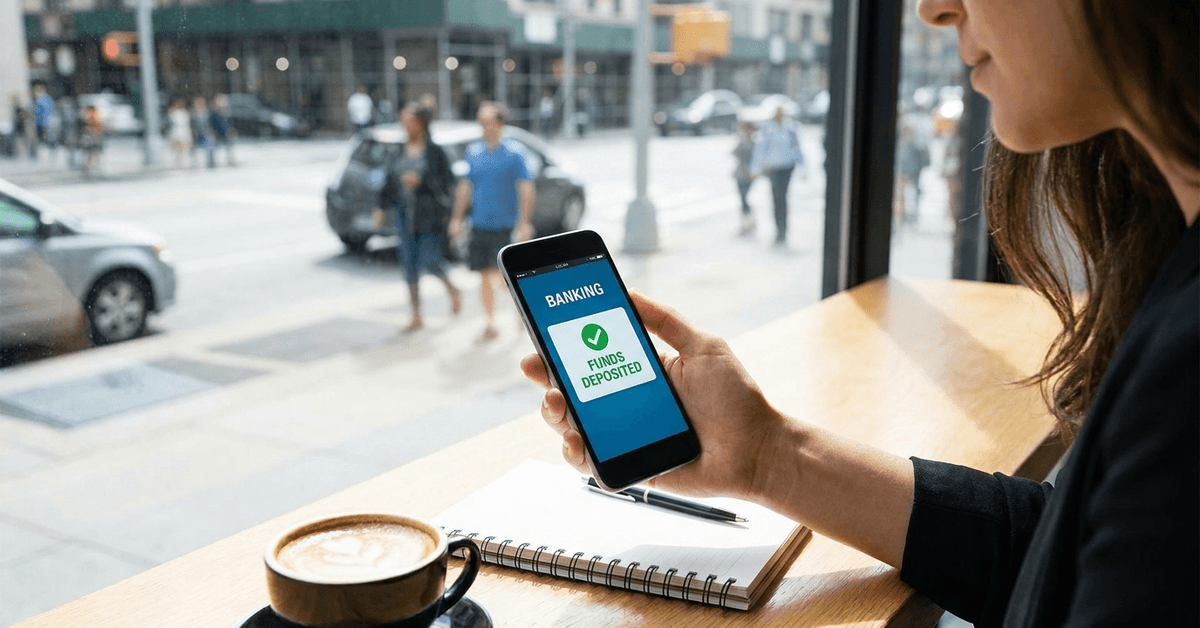
The actual deposit was $25,566. The monthly payment of $936 over 36 months was calculated on the full $27,198, not the amount received.
I would skip any lender charging above 5% origination fees for loans under $15,000 because that math punishes smaller borrowers hardest. On a $5,000 loan, an 8% fee means $400 vanishes before the money arrives.
Lenders That Charge Zero Origination Fees
A few platforms skip origination fees entirely:
- LightStream charges no origination fees, no late fees, and no early payoff penalties
- SoFi waives origination fees on SoFi Bank-originated loans, though Cross River Bank-originated loans through SoFi carry up to 9.99%
- Navy Federal Credit Union charges zero origination fees but requires military affiliation or family connection for membership
That SoFi split catches people off guard. Two borrowers applying on the same platform can get different fee structures based on which partner bank processes the loan.
What "Same-Day Funding" Means and When It Doesn't
The word "instant" does heavy lifting in personal loan marketing. Approval can happen within minutes. Funding is a different timeline.
The Cutoff Times That Turn "Today" Into "Monday"
LightStream requires applicants to complete verification and electronically sign loan documents by 2:30 PM ET on a banking business day to get same-day funding. Rocket Loans pushes that to 4:00 PM ET. OneMain Financial can deposit within an hour of closing, but only if funds go to a bank-issued debit card.
Miss those windows on a Friday, and "instant" becomes Monday. Apply Thursday evening? Same result.
I think most borrowers searching for instant personal loans at night or on weekends would be better served by a credit union like PenFed or Navy Federal, where the funding timeline is transparent from the start. PenFed ranked among the highest-rated lenders in JD Power's 2026 Consumer Lending Satisfaction Study.
Soft Pull vs. Hard Pull: The Credit Score Trade
Some platforms run a soft credit inquiry during prequalification, which leaves no mark on a credit report. The hard pull comes later, only if the borrower accepts the offer.
But not every lender separates these steps. A few run the hard pull at the application stage, which can ding a credit score by a few points. Multiply that across three or four applications while rate-shopping, and the score drops start adding up.
The fix is simple: prequalify with lenders that offer soft-pull prequalification first. SoFi, Upgrade, and Best Egg all support this. Check before clicking "Apply."
Average Personal Loan Rates Right Now
Rate data shifts weekly, so pinning down a single number is misleading. But the August 2026 picture looks like this:
| Metric | Rate |
|---|---|
| Average APR, 24-month loan (Federal Reserve, May 2026) | 11.86% |
| Average APR, 3-year loan (Bankrate, August 2026) | 12.42% |
| Average APR, 3-year loan (Credible marketplace, July 2026) | 14.52% |
| Average for borrowers with excellent credit (NerdWallet, August 2026) | 14.68% |
| Average for fair/bad credit | 28%–36% |
| Credit union average, 3-year loan (NCUA) | 10.64% |
Credit unions consistently beat online lenders on rate. That 10.64% average from the NCUA data sits well below the 14.52% from online marketplace lenders.
APR Floor Advertising Is Misleading
Every comparison site lists APR ranges starting at 5.96% or 6.20%. That floor is the rate for a borrower with a 780+ FICO score, strong income, and a short loan term.
I think the APR floor number is the most misleading stat in personal loan marketing because fewer than 15% of borrowers qualify for anything near it, based on NerdWallet's aggregate prequalification data showing an average of 19.29% even among borrowers with "good" credit.
The number that matters more is the average rate for your credit tier. Fair credit? Expect mid-to-high 20s. Bad credit? North of 30%.
Mistakes Gig Workers Make When Applying
Freelancers and gig workers face specific friction that salaried employees never encounter. The loan application process was built for W-2 income, and adapting it for 1099 earners creates gaps.
Income Verification Gets Weird Fast
Lenders use algorithms that analyze banking activity and employment data. Steady biweekly deposits from a single employer are easy for these systems to read. Irregular deposits from Uber, Fiverr, and three different freelance clients? Less so.
Some platforms accept bank statements as proof of income. Others require tax returns. A few want both plus a profit-and-loss statement. Ask which documents are needed before starting the application to avoid a rejected submission.
Borrowing More Than the Gap
A $2,000 shortfall between paychecks does not require a $10,000 personal loan. But the way online lenders present loan amounts, with sliders defaulting to $15,000 or $20,000, nudges borrowers toward larger amounts than they need.
Larger loans mean larger origination fees in dollar terms, longer repayment periods, and more total interest paid. The Consumer Financial Protection Bureau maintains tools to calculate total loan costs before signing anything.
Legal Protections Worth Knowing
The Truth in Lending Act (TILA) requires lenders to disclose the APR, total finance charges, and payment schedule before a borrower signs. This applies to every personal loan, online or in-person.
State-level caps on interest rates and fees vary widely. Some states cap personal loan APRs at 25% or 30%. Others allow up to 36%. A handful have no cap at all for certain loan types.
The CFPB operates a complaint portal where borrowers can report lenders. Filing a complaint creates a public record that the lender must respond to within 15 calendar days. That response requirement alone can resolve issues that customer service calls cannot.
When "Fast" Means "Predatory"
Any lender promising guaranteed approval regardless of credit score is a red flag. Legitimate platforms deny applicants who fall below their risk threshold. Guaranteed approval usually means the interest rate or fee structure compensates for the risk in ways that cost the borrower dearly.
Payday loan alternatives dressed up as personal loans sometimes appear in search results alongside LightStream and SoFi. Bankrate's personal loan guide maintains a vetted list of licensed lenders sorted by fees and funding speed.
Questions People Ask About Instant Personal Credit
These questions come up constantly, and the answers tend to get buried in fine print.
- Q: Can I get a personal loan with a 550 credit score?
Some lenders like Upgrade and Upstart accept scores as low as 600. Below that, options shrink dramatically, and any available loans will carry APRs near the 36% ceiling. A secured credit card or credit-builder loan may be a smarter first step. - Q: Do instant personal loans affect my credit score?
Prequalification with a soft pull does not affect credit scores. The hard inquiry at formal application typically drops a score by 5 to 10 points temporarily. Multiple hard inquiries within a 14-day window are sometimes treated as a single inquiry by scoring models. - Q: How fast can I get money from a personal loan in 2026?
Same-day funding is possible through LightStream, SoFi, and Rocket Loans, but only if documents are signed before afternoon cutoffs on a banking business day. Realistic expectation for most borrowers: one to three business days after approval.
Conclusion
The origination fee math decides whether instant personal credit saves money or quietly adds cost. Gig workers and freelancers should prequalify with soft-pull lenders before committing to any application.
Same-day funding exists, but cutoff times and weekend gaps make "instant" a weekday-only feature for most platforms. Compare the rate for your credit tier, not the floor rate in the ad.