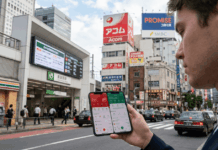
Signing up for a Japanese credit card as a foreigner feels like solving a puzzle with half the pieces missing. The forms are dense. The terms are confusing. And every rejection stings a little harder when the whole system feels designed for someone else.
A Japan Post credit card through Yuucho Bank won't solve every problem. But it sits in an interesting spot for residents who already bank with Japan Post and want a card that doesn't require a PhD in reward optimization.
Other articles push you toward Rakuten or JCB without asking a basic question first. Does a flashy points multiplier matter if you can't read the campaign terms or resolve a billing dispute without Google Translate?
That question is where the Japan Post credit card conversation should start. Especially for expats and foreign students settling into life in Japan for the long haul.
Why the Yuucho Bank Credit Card Gets Overlooked
The Yuucho Bank credit card suffers from a branding problem. Japan Post is a postal and banking institution, not a fintech startup. Nobody writes hype articles about it, and no influencer is unboxing it on camera.

But that quiet reputation hides something useful. Japan Post credit cards connect directly to the Yuucho financial ecosystem, which means paying rent, topping up IC transit cards, and managing utility bills all happen inside one dashboard.
If your Yuucho Bank account already handles your salary deposits, adding the credit card collapses a lot of friction.
Yuucho Credit Card Integration With Postal Services
The card ties into Japan Post's broader service network. Points earned through everyday purchases can sometimes be redeemed for postal services like parcel discounts or stamps.
That sounds small, but for someone shipping packages home regularly, it adds up in a way Rakuten points never will.
The Branch Support Advantage for Non-Japanese Speakers
This is the part that every credit card comparison article ignores. Japan Post has over 24,000 branches across the country.
That's a physical location where a cardholder can walk in, sit down, and talk to a human being about a billing error or a confusing charge.
Rakuten's customer support is online and phone-based. JCB routes through call centers.
For a foreign resident whose Japanese is conversational but not fluent enough for financial jargon over the phone, branch access can be the difference between resolving a problem in 20 minutes and spending three hours with a dictionary app.
I think this single feature: face-to-face branch support at over 24,000 Japan Post locations, makes the card worth considering even at a lower earn rate than Rakuten's 1% base.
Japan Post Credit Card Points: How the Earn Rate Works
The points system on a Japan Post credit card won't make anyone rich. But it runs clean, with fewer gotchas than cards that promise higher returns.
The basics worth knowing:
- Earn rate sits around 0.5% to 1% back on purchases, with occasional bumps at partner merchants
- Eligible spending covers groceries, dining, and utilities, though cash-equivalent transactions like money orders are excluded
- Limited-time campaigns sometimes push earn rates higher at specific partner stores or during seasonal windows
Redeeming Japan Post Credit Card Points
Redemption options are narrower than what a global bank offers. Points typically convert into:
- Gift cards and shopping vouchers for national retailers or electronics chains
- Japan Post service credits: parcel shipping discounts, stamps, and postal supplies
- Occasional travel rewards, though availability shifts and these aren't guaranteed year-round
Points expire after roughly 2 years from the date earned, and minimum redemption thresholds apply. The thresholds are low enough that regular monthly spending clears them without effort.
The "Boring Points" Argument Nobody Makes
I would argue that the 0.5% base earn rate at Yuucho Bank is more useful than Rakuten's 1% for one specific type of cardholder: someone who doesn't want to manage campaigns, category bonuses, or promotional windows.
Rakuten's higher rate comes with conditions. Certain multipliers only kick in through Rakuten Ichiba shopping. Others require enrollment in specific programs.
The complexity tax on a non-native speaker who has to parse all that in Japanese is real. Japan Post's system is simpler: spend money, get points, redeem them. Done.
| Feature | Japan Post (Yuucho) | Rakuten Card | JCB Card |
|---|---|---|---|
| Base earn rate | 0.5% to 1% | 1% (higher with conditions) | Varies by tier |
| Annual fee | Free or modest (waivable) | Free | Free to premium tiers |
| Branch support | 24,000+ locations | Online and phone only | Phone and limited branches |
| Best for | Residents who want simplicity | Online shoppers gaming multipliers | International travelers |
The takeaway: Japan Post cards trade peak earning potential for zero-maintenance simplicity, which suits long-term residents who treat credit cards as tools, not hobbies.
Applying for a Japan Post Credit Card as a Foreigner
The application process feels old-fashioned compared to apps that approve you in five minutes. But the tradeoff is that Japan Post tends to be more willing to consider applicants who might get auto-rejected elsewhere.
Eligibility for Foreign Residents
Applicants need to meet a few straightforward requirements:
- Age 18 or older
- Valid residence status or Japanese citizenship
- Stable income or documented ability to repay
- A Yuucho Bank account is commonly requested but not always mandatory
Foreign nationals may face extra documentation requests. Having a residence card, proof of address, and recent income statements ready ahead of time can prevent delays.
A Japanese-speaking friend who can help at the branch counter is worth their weight in gold during this process.
What the Application Timeline Looks Like
The process runs through Japan Post's Yuucho Bank website or at a local branch.
After submitting an application form with ID verification and employment details, applicants wait for preliminary screening. A confirmation call or letter follows approval, and the physical card arrives by mail.
Expect the whole cycle to take a few weeks from application to card-in-hand. Compared to instant digital approvals, that feels slow.
But the approval rate for residents with stable Yuucho accounts tends to be reasonable. The card arrives with setup instructions, and branch staff can walk through activation if anything is unclear.
Where Japan Post Credit Cards Fall Short
No card is perfect for every situation, and Japan Post has real limitations worth knowing before you apply.
International acceptance depends on whether the card is JCB-branded. JCB works well across Asia but can be hit-or-miss in Europe or North America. If frequent international travel is part of your life, a backup Visa or Mastercard fills the gap.
Point redemption options are narrow compared to Rakuten or Mitsubishi UFJ NICOS cards.
Airport lounge access, rental car insurance, and premium cashback tiers don't exist in the Japan Post lineup. These cards are built for domestic daily spending, not travel perks.
Who Should Skip This Card
Aggressive reward optimizers will feel limited. If the idea of earning 3x to 5x points through Rakuten Ichiba shopping appeals to you, and you can read the promotional terms in Japanese, a Japan Post card will feel underwhelming.
Temporary residents planning to leave Japan within a year may not benefit enough from the Yuucho ecosystem integration to justify the application process. The card's strengths compound over time. Short stays don't allow that.
Who Should Seriously Consider It
Long-term expats, foreign students with part-time income, and residents who already have a Yuucho Bank account are the sweet spot.
The combination of branch-based support, fee transparency, and postal service integration hits a practical need that flashier cards don't address.
According to Japan Post Bank's 2025 annual report, the institution serves over 120 million accounts. That institutional scale translates to branch availability in rural areas where other banks simply don't have a physical presence.
Questions People Ask About Japan Post Credit Card
Q: Can foreigners apply for a Japan Post credit card without permanent residency? Permanent residency is not required. Applicants with valid residence status and stable income can apply, though extra documentation like employment proof and residence card copies may be requested during screening.
Q: Does the Japan Post credit card work outside Japan? JCB-branded versions work in many countries across Asia. Coverage in Europe and the Americas can be spotty. Carrying a second card on the Visa or Mastercard network as backup for international trips is a smart move.
Q: How long does Japan Post credit card approval take? The timeline runs a few weeks from application to receiving the physical card. Branch applications sometimes move faster than online submissions because staff can verify documents on the spot and flag missing items immediately.
Q: Is the Japan Post credit card annual fee worth paying? Some card types waive the annual fee after a minimum number of transactions per year. Others carry a modest fee. Check the latest fee schedule on the Yuucho Bank website before applying, since these terms shift periodically.
Q: Can I link my Japan Post credit card to mobile payments? Linking to IC card top-ups and auto-pay for utility bills is supported. Compatibility with specific mobile wallet platforms depends on the card variant and issuing terms at the time of application.
Conclusion
The Japan Post credit card fills a specific gap for foreign residents who value simplicity over point maximization. Branch support in Japanese financial jargon situations alone makes it worth a hard look.
Flashier cards exist, but few match the low-friction daily experience Yuucho delivers for long-term residents. Sometimes the boring pick is the one that saves you the most headaches.