
Recruiters worldwide skim every application fast, so your document must reveal relevance and impact instantly.
Use the guidance below to shape a resume that survives the first scan and compels a deeper read.



How Recruiters Screen in Under Ten Seconds
Recruiters devote roughly seven seconds to an initial scan, according to the 2018 Ladders eye-tracking study.
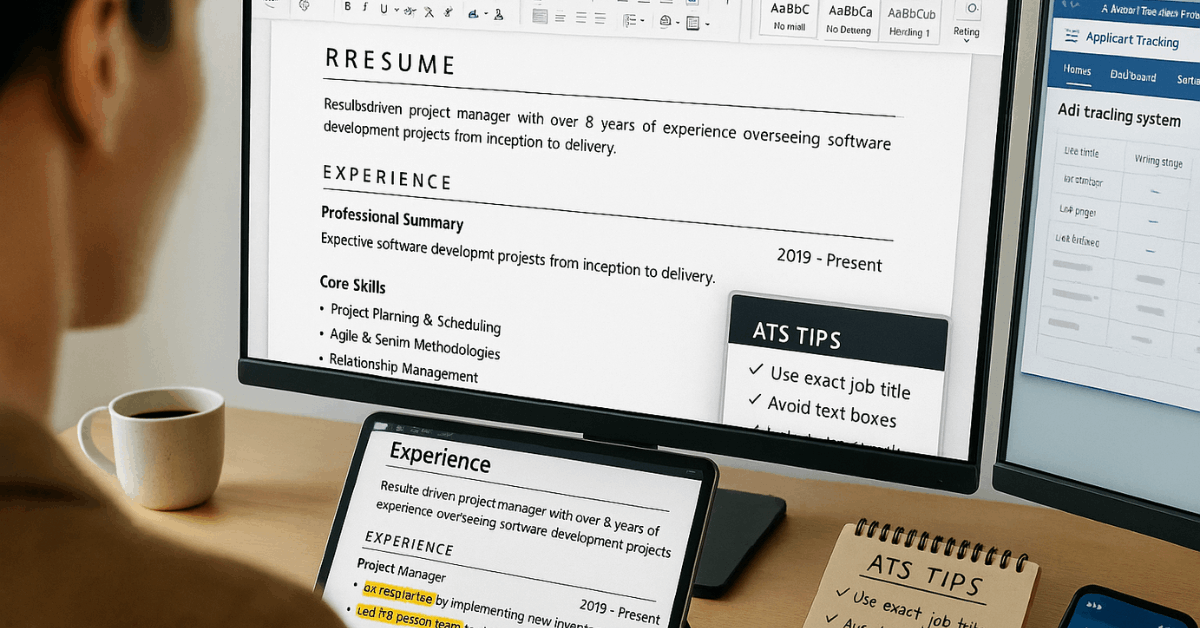
During that blink-speed review, they focus on four areas: job titles, hard skills, quantified achievements, and overall layout.
When those elements align with the job post, the resume moves forward. Anything unclear or cluttered sends it to the “no” pile just as quickly.
Key Scan Targets
Place these elements where eyes land first, the upper third of the page, and the left margin.
- Current or recent job title matching the advertised role
- Industry-specific keywords lifted directly from the posting
- Metrics proving scope and results (revenue, savings, headcount, time)
- Clean visual hierarchy that guides reading order without distraction
Recruiters worldwide rely on this pattern because it minimizes the risk of overlooking qualified talent while managing high application volumes.
Tailoring Each Submission Pays Off
Customized language convinces hiring teams that your background solves their exact problem.
Generic resumes rarely survive applicant-tracking systems (ATS) or human reviewers. Aligning statements with advertised needs shows immediate awareness of company priorities and signals genuine interest.
Practical Tailoring Steps:
- Dissect the posting. Highlight mandatory tools, certifications, and outcomes.
- Mirror critical terms. Weave identical phrases into headings and bullet points.
- Prioritize relevant experience. Shift matching projects above less applicable roles, even if chronology needs a subtotal heading such as “Selected Project Leadership.”
- Retire outdated skills. Remove software, methodologies, or industries no longer requested.
- Adjust branding line. Rewrite the headline or summary for every application so the recruiter sees an exact professional match.
Adapting these items usually takes fifteen minutes yet multiplies interview chances across regions and sectors worldwide.
Formatting that Accelerates Comprehension
Logical structure lets recruiters absorb achievements without hunting for them.
Readable design signals professionalism and respect for the reviewer’s time. While style choices vary, simplicity always wins.
Layout Principles Recruiters Prefer:
- Standard fonts: Arial, Calibri, or another sans-serif between 10- and 12-point size keep text crisp on multiple screens
- Consistent heading weights: Bold and slightly larger type for section titles aids quick navigatio
- Balanced white space: Margins of at least 1.5 cm and line spacing of 1.15 prevent visual fatigue
- Bullet efficiency: Limit each point to two lines; start with an action verb and end with an outcome or metric
- Page length discipline: One page for up to ten years’ experience, two pages when senior scope demands it—never three except in academia or medicine
Avoid tables, text boxes, and graphics because many ATS platforms worldwide strip or scramble them, causing data loss.
Crafting a Clear Career Narrative
Strategic storytelling positions you as the logical solution to the employer’s needs.
A tight professional summary guides the recruiter’s interpretation of the entire resume. Instead of repeating job duties, summarize overarching value.
Example Summary
“Technology program manager who directs cross-functional teams of up to fifteen and delivers cloud migrations 20 % under budget. AWS-certified, Lean Six Sigma-trained, fluent in English and Spanish.”
This statement clarifies role focus, scale, signature achievement, credentials, and international readiness—information a worldwide recruiter needs immediately.
Quantifiable Achievements Trump Task Lists
Numbers transform claims into proof.
Hiring managers authorize offers when they believe a candidate will improve revenue, reduce costs, or elevate quality. Concrete metrics fuel that belief.
| Weak Statement | Strong Alternative |
| Managed sales team | Led eight-person sales unit that hit 118 % of annual target |
| Reduced expenses | Cut SaaS licensing fees 15 % through vendor renegotiation |
| Responsible for onboarding | Designed onboarding playbook that trimmed ramp-up time from eight to five weeks |
Use percentages, currency, headcount, or timeframes—whichever best reflects impact. Recruiters worldwide interpret quantified results faster than descriptive paragraphs.
Aligning With Applicant-Tracking Systems
Keyword compatibility ensures your resume reaches human eyes.
Most medium-to-large employers worldwide route applications through ATS filters. Those engines score how closely a resume mirrors the posting.
ATS-Friendly Checklist:
- Exact job title placed below your name.
- Keyword density: each high-value skill appears at least once in context.
- Simple file format: submit as .docx or PDF only if posting allows; avoid scanned images.
- Section labels the system recognizes—“Professional Experience,” “Education,” “Certifications.”
- Plain bullet characters such as circles or dashes.
Running the document through a free ATS simulation tool can reveal missing keywords before submitting.
Synchronizing Your LinkedIn Profile
Consistent online branding reassures global recruiters performing due diligence.
After shortlist creation, many recruiters open LinkedIn to verify employment dates, titles, and recommendations. Mismatched data raises concerns about attention to detail.
Profile Optimization Actions:
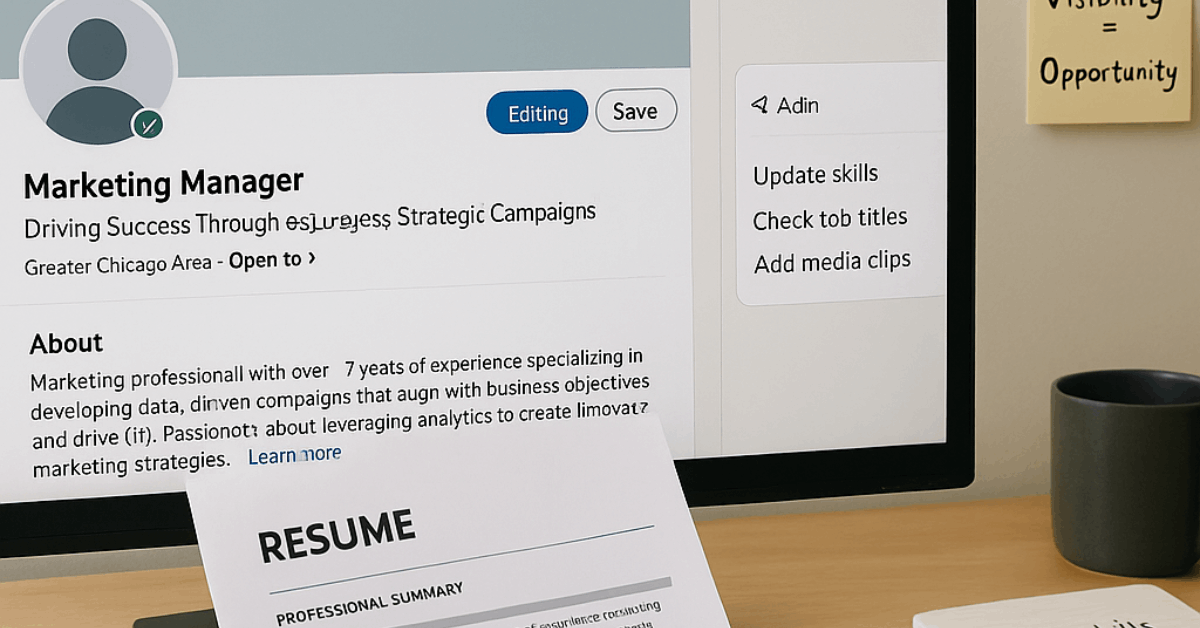
- Headline mirrors resume summary.
- About section expands achievements using first-person voice (acceptable on LinkedIn) to add warmth.
- Featured media such as project snapshots or speaking clips showcase expertise visually.
- Skills section contains every core competency from the resume plus secondary abilities.
- Recommendations validate leadership style and collaboration results.
An updated profile ranks higher in searches, attracting passive opportunities worldwide.
When Professional Help Accelerates Results
Specialists refine messaging while you focus on networking and interview prep.
If tailoring feels overwhelming or results stall, outside support offers leverage.
Service Types Available Worldwide:
- Certified resume writers craft documents aligned with modern ATS rules.
- Reverse-recruiting firms pitch your profile directly to hiring managers, bypassing traditional postings.
- Career coaches clarify goals and strengthen interview tactics.
Select providers with industry knowledge, current certifications, and transparent pricing. Investing once often shortens search time significantly.
Nine-Step Blueprint for a Winning Resume
Follow a structured process to build a document that earns interviews.
- Choose an appropriate format. Chronological suits continuous experience, functional serves career changers, combination balances both.
- Display contact information prominently. Name, phone, professional email, and optional global city remain sufficient.
- Target every role individually. Modify keywords, reorder bullets, and refresh summary each time.
- Open with a concise summary. State expertise, scale, and signature outcome in three lines.
- Highlight hard and soft skills. Group them by theme—technical tools, leadership traits, language fluency.
- Detail professional history in reverse order. Pair each position with three to five impact-oriented bullets.
- Add education plus relevant certifications. Include only items that strengthen candidacy for the advertised role.
- Consider optional sections for awards or community leadership. Keep entries brief and outcome-driven.
- Proofread meticulously. Read aloud, run spell-check, and solicit outside feedback; one typo can negate strong credentials.
Using this sequence keeps development organized and ensures no critical element is overlooked.
Formatting: Example Section Headers
Consistent headings guide reader expectations.
- PROFESSIONAL SUMMARY
- CORE SKILLS
- SELECTED ACHIEVEMENTS
- PROFESSIONAL EXPERIENCE
- EDUCATION & CERTIFICATIONS
- ADDITIONAL INFORMATION
Each header should be bold, in all caps, and separated from text by one blank line for clarity.
Common Missteps that Sideline Applicants
Avoid pitfalls that trigger instant rejection worldwide.
- Dense text blocks without bullets or white space
- Irrelevant early-career jobs consuming prime page real estate
- Personal data such as age, marital status, or full address
- Photos that can cause bias concerns and ATS parsing errors
- Creative graphics that look impressive on screen yet confuse parsers
Keeping content concise and professional prevents these traps.
Action Plan for Continuous Improvement
Iterate based on recruiter feedback until interview volume meets goals.
- Track applications in a spreadsheet noting hits and misses.
- Analyze outcomes: if responses lag, review keyword alignment.
- Solicit external reviews from mentors or industry peers.
- Refresh achievements quarterly to include new metrics.
- Update LinkedIn simultaneously to maintain consistency.
Ongoing refinement keeps your resume relevant as responsibilities grow.
Conclusion
A resume that mirrors job requirements, showcases measurable victories, and respects recruiter time earns interviews across industries worldwide.
Apply the principles above, and every submission will present you as the obvious solution rather than another hopeful applicant.