Student visa holders in Japan can legally work 28 hours per week. Go over that number, and the consequences hit immigration status, not just a paycheck. Every shift at every chain restaurant counts toward that cap, and Sukiya's 24-hour scheduling makes it dangerously easy to say yes to too many hours.
Most job guides for foreign students treat that weekly limit like a footnote. It belongs at the top. The 28-hour rule shapes which shifts to pick, how many locations to juggle, and when to say no to a manager asking for overtime help.
This guide is for international students in Japan who want a first part-time job at Sukiya without wrecking their visa status or burning out on a schedule built for someone with zero class obligations.
The 28-Hour Cap Changes How Sukiya Shifts Work for Students
Sukiya stores in major cities run 24 hours. That sounds like freedom, but for a student visa holder, it creates a math problem that never fully goes away.
A typical shift runs 3 to 5 hours. Four shifts a week at 5 hours already puts someone at 20 hours. Adding a fifth shift to cover a coworker pushes dangerously close to 28.
And during school breaks, the cap loosens to 40 hours per week, which means recalculating the entire schedule every semester.
How Sukiya Tracks Hours for Part-Timers
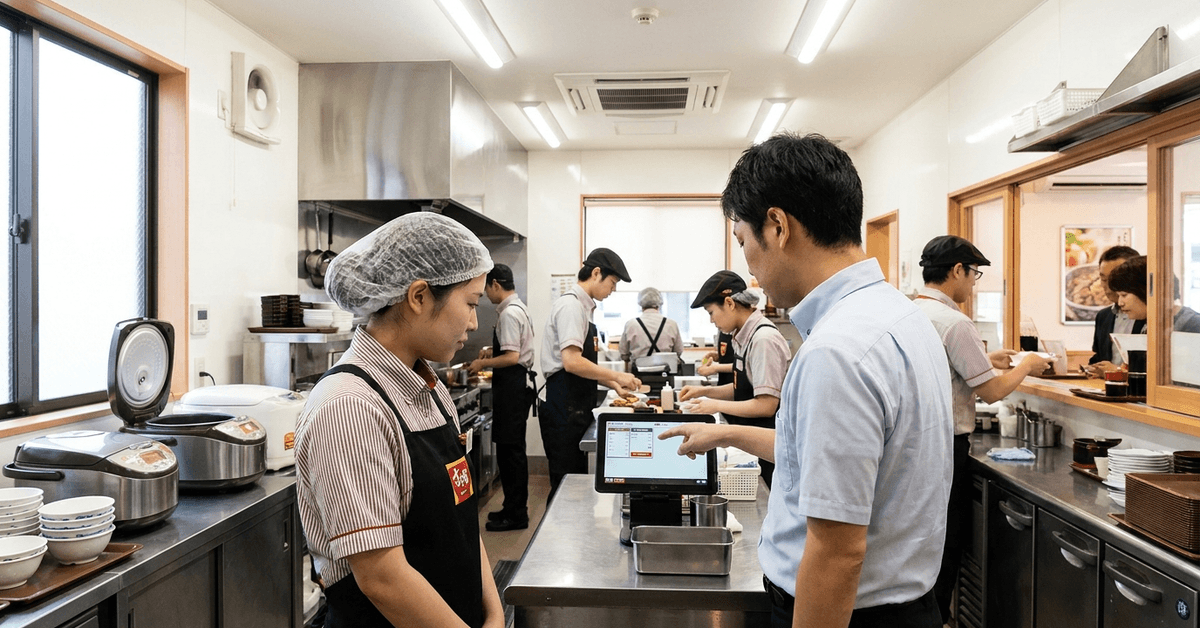
Sukiya, as a large corporate chain, issues electronic or paper payslips monthly. Those payslips become documentation if a student applies for a new visa or signs a housing lease.
The paper trail is clean and automated, so there is no ambiguity about how many hours were logged.
I'd argue that Sukiya's payslip system is one of its most underrated advantages for student visa holders. A smaller independent restaurant might pay cash or keep sloppy records.
Sukiya's corporate structure forces proper documentation, and that documentation protects a student during visa renewal at immigration.
Late-Night Shifts and the Premium Pay Trade-Off
Late-night shifts (generally after 10 PM) often pay a higher hourly rate. That premium sounds appealing when rent is due.
But students under 18 face legal restrictions on late-night work under Japanese labor law, and even adult students need to weigh whether a 11 PM to 2 AM shift leaves enough sleep before a 9 AM lecture.
The premium pay is real. The question is whether three extra hours of late-night wages per week are worth the schedule damage over a full semester.
Japanese Language Expectations at Sukiya Are Lower Than Students Think
A common worry among foreign students is that restaurant jobs require near-fluent Japanese. Sukiya's setup tells a different story, especially for kitchen positions.
Kitchen prep and cooking roles require far less spoken Japanese than cashier work. The workflow is repetitive: rice portions, toppings, bowl assembly.
Sukiya's training uses shift handbooks, digital checklists, and orientation videos, all of which follow structured patterns that a student with basic conversational Japanese can follow within a few weeks.
Customer-Facing Roles Need Specific Phrases, Not Fluency
Cashier positions do require spoken Japanese, but the range is narrow. Menu explanations, greetings, and payment confirmations follow scripts. Practicing a few set phrases before the interview goes a long way:
- "Irasshaimase" (welcome greeting used constantly during shifts)
- "Yoroshiku onegaishimasu" (polite phrase for introductions and the interview itself)
- "Arigatou gozaimasu" (thank-you phrase used at payment and departure)
Nobody expects a foreign student to handle a complicated customer complaint in rapid Japanese on day one. Sukiya stores with diverse teams are accustomed to employees still learning the language.
I Think Kitchen Roles Beat Cashier Roles for First-Time Foreign Workers
I think the widespread advice to aim for customer-facing positions first is wrong, at least at Sukiya.
Kitchen roles at Sukiya have lower language barriers, a more predictable daily routine, and training that is structured enough to teach the job through repetition rather than conversation.
A student who spends three months on kitchen prep will absorb workplace Japanese faster than someone thrown into cashier scripts they memorized but don't fully understand.
The real language learning happens through coworker interaction during slow periods, not through rehearsed customer greetings.
Sukiya Application Process: Online vs. Walking In
Applying to Sukiya is straightforward either way, but the two paths suit different situations.
The Sukiya careers page lets applicants select a preferred location, fill out basic details (name, visa status, contact information, shift preferences), and optionally upload a resume.
Response times depend on how urgently a specific store needs staff. Some students report hearing back within days; others wait longer.
Applying in Person Still Works
Almost every Sukiya location posts job notices near the entrance. Walking in, picking up a paper application, and meeting a manager face-to-face is still common.
For students nervous about online forms in Japanese, this route has an advantage: the manager sees effort and initiative immediately.
Even stumbling through the conversation is fine. Staff at Sukiya are used to new applicants being anxious. A first impression built on showing up matters more than a flawless self-introduction.
The Interview Is Simpler Than Expected
Sukiya interviews lean casual. Expect questions about availability, a short role-play scenario, and basic motivation questions. Onboarding involves orientation videos, a uniform fitting, and a gradual ramp into responsibilities.
A few things that help during the interview:
- Mentioning a previous visit to Sukiya as a customer (enthusiasm gets noticed)
- Being upfront about class schedules and exam periods
- Carrying a residence card and any work permission documentation
No single answer guarantees a hire. But a visible willingness to learn consistently beats prior restaurant experience at this level.
Sukiya Pay, Benefits, and Tax Rules for Foreign Part-Timers
Hourly pay at Sukiya varies by region and shift timing, but the chain generally sits at competitive rates within Japan's quick-service restaurant industry. Late-night premiums and overtime rates are regulated and added automatically.
| Feature | Part-Time | Full-Time |
|---|---|---|
| Transportation allowance | Varies by store | Typically included |
| Meal subsidy | Often available | Included |
| Health insurance (Shakai Hoken) | Not standard | Enrolled after meeting set conditions |
| Payslip format | Electronic or paper, monthly | Electronic or paper, monthly |
Full-time employees who meet enrollment conditions get Shakai Hoken (social insurance), a major benefit for long-term financial security in Japan.
Tax and Income Reporting for Student Workers
Every worker in Japan must follow salary declaration and tax rules. Sukiya's corporate payroll handles withholding automatically, so students do not need to chase down tax paperwork independently.
Those monthly payslips also double as income proof for visa renewals and apartment applications.
One mistake to avoid: working at two part-time jobs simultaneously and exceeding the 28-hour combined weekly limit without realizing it. Sukiya's records will show their hours clearly, but hours at a second job are the student's own responsibility to track.
Sukiya vs. Yoshinoya vs. Matsuya for Student Part-Timers
All three gyudon chains hire part-time foreign students. But the differences sit in scheduling flexibility, promotion paths, and how each chain handles language gaps.
Sukiya's 24-hour stores in bigger cities give the widest shift selection. Yoshinoya and Matsuya run similar menus, but policies on shift swapping, training structure, and promotion speed differ store by store.
Comparing these differences after attending interviews at two or three chains is worth the time, because job ads rarely capture workplace culture.
A few alternatives outside the gyudon category are also worth considering:
- Convenience stores (Lawson, FamilyMart, 7-Eleven) offer flexible shifts but involve a wider range of tasks beyond food
- Hotel food prep positions sometimes require less spoken Japanese than any restaurant counter role
- Café jobs give more conversational Japanese practice but may have fewer available hours
The Ministry of Justice immigration page has updated rules on work permissions for different visa categories. Checking there before applying anywhere saves confusion later.
Career Growth at Sukiya: Part-Timer to Manager
Sukiya has a documented path from part-time kitchen staff to shift manager to area supervisor. The progression is slow and steady rather than rapid. Many current store managers started as part-time cashiers or cooks.
Promotion Depends on Reliability More Than Tenure
Sticking around matters, but consistent attendance and reliability matter more than months on the calendar. Shift handbooks, regular feedback sessions, and digital checklists create a training environment where progress is trackable.
Bilingual skills can become an advantage at certain locations, especially stores near universities or tourist areas. The ability to train new foreign hires in their language while managing in Japanese is a practical skill Sukiya values.
Questions People Ask About Sukiya Jobs
These are the questions that come up most often from students researching Sukiya for the first time.
- Q: Can I work at Sukiya on a student visa? Yes, as long as the visa includes work permission (or a separate work permit has been approved). The weekly cap is 28 hours during school terms and typically 40 hours during official university breaks. Sukiya checks documentation carefully during onboarding.
- Q: Do I need to speak fluent Japanese to get hired at Sukiya? Fluency is not required. Kitchen positions need minimal spoken Japanese, and customer-facing roles rely on a small set of scripted phrases. Stores with diverse staff are especially accommodating for language learners.
- Q: How much does Sukiya pay per hour in 2026? Rates vary by prefecture and shift timing. Late-night shifts typically carry a premium above the base hourly rate. Exact figures should be confirmed on Sukiya's careers page or during the interview, since regional minimum wages change annually.
- Q: Is it possible to get promoted from part-time to full-time at Sukiya? It is possible, and many managers followed that exact path. The promotion timeline depends on attendance consistency, willingness to take on training responsibilities, and store-level needs. It is not fast, but it is documented and structured.
- Q: What documents do I need to apply at Sukiya as a foreign national? A valid residence card and a visa that permits employment are the minimum. Student visa holders should also carry proof of their work permission status. Having these ready at the interview avoids delays in the onboarding process.
Conclusion
Sukiya gives foreign students in Japan a structured entry point into part-time work with proper documentation. The 28-hour weekly cap demands careful shift planning, but Sukiya's corporate payroll makes tracking hours simple.
Kitchen roles offer the lowest language barrier for students still building Japanese fluency. A first job at Sukiya can be short-term income or the start of a longer career path, depending on how far a student wants to take it.