
For many, working on cruise ships sounds like a ticket to both adventure and a solid paycheck. Those who are curious about exploring the world while earning income might find this career path especially attractive.
This guide unpacks each step, offering a clear pathway for those considering jobs at sea. The focus here is on practical details, risks, and the unique lifestyle attached to cruise ship employment.



It’s especially well-suited for people who value international experience, steady pay, and cultural immersion.
Why Cruise Ship Jobs Appeal to Global Job Seekers?
Cruise ship jobs offer a blend of international exposure, steady incomes, and travel. People who enjoy meeting new individuals from around the world, or who simply want an unconventional work environment, might see this path as full of promise.
Yet, it’s not all sunsets on the open sea; there are challenges that make this career quite distinct.
Opportunities for Career Growth
Some cruise lines invest in staff training and open doors for promotions. While not every role has a clear ladder, those who are committed might discover more room for professional growth over time than expected.
Travel While Working
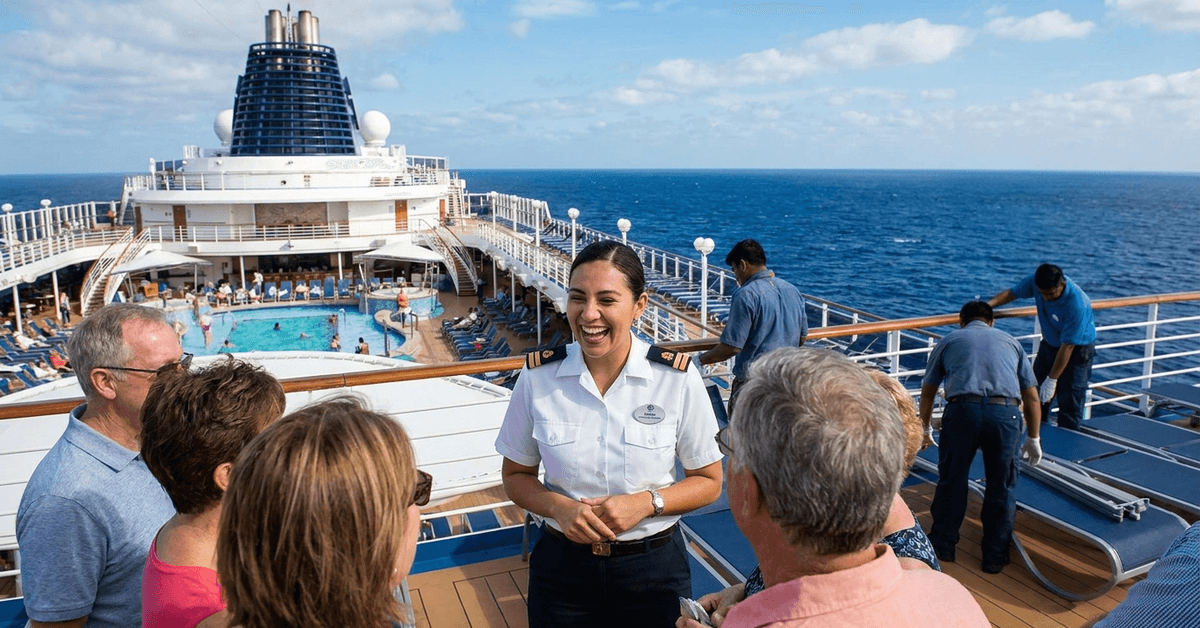
Seeing multiple countries in a single contract is a notable perk. For some, the experiences gained are as valuable as the money earned. Workdays can be demanding, but the occasional shore leave brings unique rewards.
Understanding Cruise Ship Job Types
Roles vary widely on cruise ships, spanning hospitality, technical positions, entertainment, and management. Those with hospitality or catering experience might feel most at home, but various backgrounds can be relevant.
Main Work Departments
- Food & Beverage: Waiters, bartenders, cooks, and dishwashers.
- Guest Services: Receptionists, concierges, and shore excursion staff.
- Housekeeping: Cabin stewards and cleaners.
- Technical Crew: Engineers, electricians, technicians.
- Entertainment: Performers, activity coordinators, youth staff.
Essential Non-Technical Roles
Apart from technical crew, many jobs focus on passenger service. Experience in customer service or languages may help, though for some entry-level roles, specific expertise isn't always essential.
Basic Requirements for Working on Cruise Ships
Most cruise lines hold specific requirements for candidates. Some of these relate to qualifications, while others concern health, availability, or language abilities. Being aware of these helps to avoid disappointment later on.
Age and Documentation
- Minimum age is usually 21 for most positions, but some accept candidates at 18.
- Valid passport is absolutely essential.
- Seafarer’s medical certificate, acquired through an authorized maritime clinic.
Language and Skills
English is a must. Additional language skills (Spanish, French, German) offer advantages. Customer-facing roles often require patience, adaptability, and resilience.
Health and Physical Fitness
A good physical condition is generally required. Medical assessments are routine, ensuring the candidate can manage duties in the ship’s unique environment.
Step-by-Step Process to Get a Job on Cruise Ships
The hiring process can be competitive. Breaking it down, though, tends to make things clearer and a bit less daunting.
1. Research Cruise Lines and Opportunities
Each cruise line operates differently. Reviewing the official careers pages of major companies offers the most reliable start. Lines like Royal Caribbean, Carnival, MSC Cruises, and Norwegian Cruise Line often post detailed job listings.
2. Select a Role That Matches Your Skills
Narrowing choices by reviewing required qualifications and duties helps manage expectations. If hospitality is your strength, for example, focus efforts on those listings.
3. Prepare a Specialized Resume and Cover Letter
Resumes for cruise ship jobs should spotlight experience relevant to the shipboard environment. Highlighting teamwork, flexibility, and language proficiency seems to resonate best.
When possible, customizing a cover letter to mention the cruise line’s values or destinations signals genuine interest.
4. Apply Through Official Websites or Approved Agencies
Applying directly via cruise lines’ official websites is generally safest. For some regions, lines contract approved crew agencies—verifying agency legitimacy can prevent falling prey to scams. Specific country hiring partners are often listed on cruise lines’ careers pages.
5. Prepare for Interviews
Initial interviews commonly happen online. Questions typically revolve around customer experience, English proficiency, teamwork, cultural sensitivity, and adaptability. Some might expect group interviews or interactive scenarios.
6. Complete Pre-Employment Medical and Clearances
Candidates who succeed in the interview stage are requested to undergo medical exams. Additional background checks might be part of the process, ensuring safety for all on board.
7. Attend Mandatory Training
Before joining, many receive safety and emergency response training. These courses satisfy international maritime regulations and often take place at shore-based training centers.
8. Gather All Legal Documents
Besides passports and medical certificates, some workers need visas or specific work permits. Immigration requirements can vary according to the homeport and itineraries of the ship.

What to Expect: Pros and Cons of Life at Sea
As with any job, reality sometimes falls short of expectations. Life on a cruise ship comes with adventures and challenges in equal measure.
Advantages
- Travel : Explore destinations like the Caribbean, Alaska, or Mediterranean while working.
- Low Living Costs : Food and accommodation are usually provided.
- Multicultural Environment : Work with people from dozens of countries.
Drawbacks
- Long working hours are common.
- Cabin space can be cramped and shared.
- Contracts often require several months away from home.
- Seasickness can be an issue, even for seasoned crew.
Legal Compliance and Safe Job Search Practices
Staying within legal and regulatory guidelines isn’t just about ticking boxes. Candidates benefit from being cautious during job searches, especially as scams exist in this sector.
Checking Agency Authenticity
There’s real value in verifying agencies through official cruise line websites or global bodies like the International Maritime Organization. Never making advance payments when applying helps keep applicants safe.
Understanding Work Contracts
The details within a formal contract—wages, working hours, vacation, and repatriation terms—should be reviewed calmly. Sometimes, a clause or requirement seems confusing; it’s normal to want a second opinion on those points.
Tips for Improving Chances of Getting Hired
While no path guarantees employment, some habits and decisions have helped many new hires get started in the industry.
Additional Certifications
STCW Basic Safety Training is widely recognized. For technical or security-related roles, additional qualifications carry particular weight.
Building Language Proficiency
Taking time to improve conversational English or other languages can noticeably increase attractiveness to employers.
Networking with Alumni
Some online communities comprised of ex-crew and current workers share first-hand advice. Input from those who've "been there" provides insights well beyond what official listings include.
Common Myths About Cruise Ship Jobs
Certain ideas about these jobs persist, but not all stand up to close scrutiny. For instance, some expect constant leisure or minimal workload; the reality tends to be more demanding, if sometimes more rewarding, too.
Myth: It's a Prolonged Vacation
This is probably the most common misunderstanding. Crew work long hours in high-pressure situations. Rest time exists, but so does a packed schedule.
Myth: High Salaries Guaranteed
Salaries stretch wide, depending on department and seniority. Sometimes, the non-cash perks are as appealing as the pay itself.
Conclusion
Cruise ship jobs can be a rewarding option for people who want international experience, steady work, and a multicultural environment.
The process usually involves choosing the right role, preparing strong documents, applying through official channels, and completing interviews, medical checks, and training.
Applicants who show flexibility, customer service skills, language ability, and readiness for life at sea may stand out more effectively.
With careful preparation and safe job-search practices, cruise ship work can become a practical path toward global career growth.